The New Rules of Long-Distance Love in the Age of Frozen Eggs"

Jul 3, 2025 By

In an era where biological clocks are increasingly decoupled from romantic timelines, egg freezing has emerged as a quiet revolution in modern love. The procedure, once a fringe medical option for cancer patients, has been embraced by a growing demographic: women navigating the unpredictable terrain of 21st-century relationships. This technological pause button on fertility is rewriting the unspoken rules of courtship, commitment, and what it means to be "ready" for motherhood.

The statistics tell a compelling story. Fertility clinics worldwide report a 400% increase in elective egg freezing procedures since 2010, with the most dramatic spikes occurring in metropolitan hubs like New York, London, and Singapore. What began as a corporate perk at Silicon Valley tech giants has trickled down to become a legitimate family planning consideration for middle-class professionals. "It's not about delaying motherhood anymore," explains Dr. Elena Rodriguez, a reproductive endocrinologist at Columbia University. "We're seeing women who absolutely want children - just not under societal pressure or with partners they wouldn't choose without this biological deadline looming."

This shift has created ripple effects across dating cultures. Relationship therapists observe that women with frozen eggs demonstrate markedly different behaviors in long-term partnerships. The infamous "biological clock panic" that once rushed timelines for engagement rings and nursery plans has been replaced by what sociologists term "the evaluation period." Without the sword of declining fertility hanging overhead, couples report taking 18-24 months longer to reach major relationship milestones compared to previous generations.

Dating apps have adapted accordingly. Premium services like The League and Raya now allow users to display egg freezing status alongside education and career details - a move that sparked controversy but proved popular among their demographics. "Seeing that a woman has preserved her fertility options makes me feel like we're starting from a place of honesty," shares Michael, a 38-year-old investment banker who's been using the filters. "There's no hidden agenda about rushing to conception."

However, the technology introduces new complexities to romantic negotiations. Some men report feeling pressured to contribute to the significant costs of egg storage (averaging $10,000 initially plus $500-$1000 annually), viewing it as a modern dowry of sorts. Prenuptial agreements increasingly include clauses about disposition of frozen eggs in case of divorce. Perhaps most intriguingly, couples who meet after a woman has frozen her eggs describe a subtle power dynamic shift - with both parties acknowledging that pregnancy could theoretically happen on the woman's preferred timeline, regardless of the male partner's age.

The medical community continues to debate the ethics of marketing what they term "social egg freezing." While success rates have improved dramatically - with vitrification techniques yielding 75-80% survival rates for thawed eggs - doctors caution that the procedure shouldn't be viewed as an indefinite fertility insurance policy. "The best outcomes still occur with eggs frozen before 35," notes Dr. Rodriguez. "We're seeing a secondary wave of women who froze at 38 expecting miracles at 45, and the biological reality doesn't always cooperate."

Cultural attitudes are evolving faster than the science. In Seoul, where egg freezing among unmarried professionals has become commonplace, matchmakers report that men now ask potential partners' "egg age" (when the eggs were frozen) rather than chronological age. Tokyo fertility clinics offer "egg freezing parties" where groups of friends undergo initial consultations together, transforming what was once a private medical decision into a social experience. Meanwhile, in conservative societies, the technology has created quiet rebellions - Saudi women increasingly travel abroad for the procedure despite religious objections, viewing it as a form of empowerment.

The psychological impact is equally fascinating. A 2023 Cambridge study found that women who froze their eggs exhibited 30% lower rates of "settling" in partner selection compared to a control group. "Removing the fertility countdown appears to allow for more deliberate mate selection," explains lead researcher Dr. Priya Desai. "But we're also observing higher rates of perpetual searching - some subjects struggle to ever feel 'ready' when the biological pressure valve has been released."

As with any social shift driven by technology, unintended consequences emerge. Sperm banks note a decline in younger donors, as women feel less urgency to create "backup plans" through artificial insemination. Wedding planners report an average 8-month delay in bookings from couples where the woman has frozen eggs, with many opting for longer engagements. Even the language of relationships is changing - the term "pre-fertility window" has entered therapeutic vernacular to describe the extended period before frozen eggs would be used.

What becomes clear is that egg freezing isn't merely a medical procedure, but a cultural watershed moment. It has effectively created a new relationship phase between dating and child-rearing - one where commitment can develop at its own pace, unyoked from reproductive imperatives. As more women worldwide gain access to this technology (currently available in 68 countries with varying regulations), the very architecture of how we build families continues to transform. The love stories of tomorrow may well begin with liquid nitrogen tanks and end with nursery rhymes - with an entirely new rhythm in between.

Recommend Posts
Romance

Bare Branches' Counterattack: 1111 Becomes the Hottest Marriage Proposal Day"

By /Jul 3, 2025

In a surprising twist of cultural evolution, China's once-obscure Singles' Day has transformed into one of the most popular dates for marriage proposals across Asia. What began as a tongue-in-cheek celebration for unattached youth has blossomed into a romantic phenomenon, with November 11th now rivaling Valentine's Day as the calendar's most significant date for declarations of love.
Romance

Under the Mistletoe: A Cultural Archaeology of Forced Kissing

By /Jul 3, 2025

The tradition of kissing under the mistletoe is one of the most enduring and whimsical customs associated with Christmas. What appears as a lighthearted festive practice, however, carries with it a complex history that intertwines mythology, folklore, and social rituals. The mistletoe’s journey from sacred plant to a symbol of forced affection reveals much about how traditions evolve, often obscuring their darker origins beneath layers of merriment.
Romance

A New Interpretation of Qixi: The Evolution from Magpie Bridge to Satellite Calls"

By /Jul 3, 2025

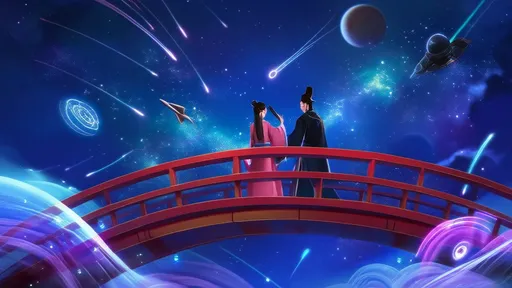
The Qixi Festival, often called Chinese Valentine's Day, has been celebrated for over two millennia. Rooted in the poignant legend of the Cowherd and Weaver Girl, this festival traditionally symbolizes the annual reunion of two star-crossed lovers across the Milky Way, facilitated by a bridge formed by sympathetic magpies. Yet, as we navigate the digital age, the essence of this ancient tale is being reinterpreted through the lens of modern technology.
Romance

A Valentine's Day Survival Guide: Anti-Consumerist Romantic Ideas"

By /Jul 3, 2025

Valentine’s Day has long been synonymous with grand gestures, expensive gifts, and lavish dinners. The pressure to conform to commercialized ideals of romance can turn what should be a celebration of love into a stressful, wallet-draining affair. But what if we reimagined Valentine’s Day as something more authentic, less about consumerism and more about connection? This is the heart of the Valentine’s Survival Guide: Anti-Consumerist Romantic Solutions—a manifesto for those who believe love shouldn’t come with a price tag.
Romance

Breakup Power: Essential Emotional Survival Skills for the Modern Era"

By /Jul 3, 2025

In an era where romantic relationships are increasingly complex and fleeting, a new concept has emerged from China's relationship discourse: "Breakup Power" (分手力). This cultural phenomenon, detailed in the controversial self-help guide The Power to Break Up: Essential Emotional Survival Skill for Modern Times, has sparked intense debate about how contemporary individuals navigate love and separation in the age of disposable connections.
Romance

The Futility of Love: A Reassessment of Emotional Value in the Age of Utilitarianism"

By /Jul 3, 2025

In an era dominated by efficiency metrics and ROI calculations, love—that most irrational of human impulses—has become a subject of skepticism. The modern world, with its relentless focus on measurable outcomes, has little patience for the ambiguities of romance. A growing chorus of voices now questions whether love, particularly in its traditional romantic form, is anything more than a sentimental relic in our hyper-practical age.
Romance

Platonic Revenge: The Contemporary Revival of Spiritual Love

By /Jul 3, 2025

In an era dominated by dating apps and instant gratification, a quiet revolution is taking shape—one that challenges the very foundations of contemporary relationships. The concept of Platonic love, once relegated to philosophy classrooms, has emerged as a radical alternative to the physical and often transactional nature of modern romance. This revival isn't about rejecting intimacy but rather redefining it, creating space for emotional and intellectual connections that transcend the physical.
Romance

Single Worship: Why the Ability to Be Alone Determines the Quality of Love"

By /Jul 3, 2025

The hum of dating apps has become white noise in modern relationships, yet a quiet revolution brews beneath the surface. Across cosmopolitan cities from Berlin to Tokyo, a growing tribe of intentionally single individuals are rewriting the rules of intimacy. Their manifesto? That true connection begins not with swiping right, but with the radical act of sitting still with oneself.
Romance

The 'Anti-Romance' Movement: The Perils of Overly Sweet"

By /Jul 3, 2025

The modern world is drowning in saccharine. From social media feeds saturated with curated perfection to blockbuster films that tie every narrative with a glittering bow, our culture has become obsessed with romanticized ideals. This phenomenon, however, is far from harmless. A growing counter-movement—dubbed the "Anti-Romanticism" movement—argues that the relentless pursuit of sweetness, both in art and in life, carries hidden dangers. It distorts reality, fosters unrealistic expectations, and ultimately leaves individuals ill-equipped to handle life’s inevitable complexities.
Romance

Emotional Metaverse: Digital Twin Love Experiment"

By /Jul 3, 2025

The concept of love has always been a fluid, evolving phenomenon, shaped by cultural shifts and technological advancements. Now, with the rise of the metaverse, a new frontier is emerging—one where digital twins and artificial intelligence are redefining romantic connections. Emotional Metaverse: Digital Twin Love Experiments explores this uncharted territory, where human emotions intersect with virtual identities in ways that challenge our traditional understanding of relationships.
Romance

Genetic Matchmaking: Can Science Replace the Heart's Desire?

By /Jul 3, 2025

In a world where technology increasingly mediates human connections, the concept of using genetic compatibility to find love has moved from science fiction to reality. Companies now offer DNA-based matchmaking services, promising couples a higher chance of long-term happiness based on biological compatibility. But as algorithms and lab results infiltrate the realm of romance, a pressing question emerges: can science truly replace the elusive magic of falling in love?
Romance

A Guide to Booking a Space Honeymoon Trip

By /Jul 3, 2025

The concept of a honeymoon has evolved dramatically over the years, and for those seeking the ultimate adventure, space travel is now a tantalizing possibility. The idea of exchanging vows under the stars—literally—has shifted from science fiction to a plausible reality. With private space companies making significant strides, couples can now consider celebrating their union in zero gravity, surrounded by the infinite cosmos. The experience promises not just breathtaking views but also an unparalleled sense of intimacy and wonder.
Romance

The New Rules of Long-Distance Love in the Age of Frozen Eggs"

By /Jul 3, 2025

In an era where biological clocks are increasingly decoupled from romantic timelines, egg freezing has emerged as a quiet revolution in modern love. The procedure, once a fringe medical option for cancer patients, has been embraced by a growing demographic: women navigating the unpredictable terrain of 21st-century relationships. This technological pause button on fertility is rewriting the unspoken rules of courtship, commitment, and what it means to be "ready" for motherhood.
Romance

Love White Paper 2070: Will Humans Still Date Offline?"

By /Jul 3, 2025

In the year 2070, the concept of dating has undergone transformations that would have been unimaginable a century ago. The Love White Paper 2070 delves into the intriguing question: Do humans still engage in offline dating? As virtual realities and AI companions become increasingly sophisticated, the traditional notion of face-to-face romance seems almost antiquated. Yet, against all odds, the human desire for physical connection persists—albeit in unexpected ways.
Romance

Intercultural Marriage: The Philosophy When Chopsticks Meet Forks

By /Jul 3, 2025

In the dim glow of a Shanghai jazz bar, Mei's chopsticks hovered over a plate of xiaolongbao as she watched David struggle with the delicate soup dumplings. His fork punctured the thin skin, sending precious broth spilling across the bamboo steamer. That moment - equal parts comical and revealing - became their private metaphor for the beautiful clumsiness of intercultural love.
Romance

Asexual Manifesto: No Roses, Just Understanding"

By /Jul 3, 2025

In a world where romantic relationships are often portrayed as the ultimate goal, a growing community is challenging this narrative with quiet but firm resolve. The asexual movement, long overlooked in discussions about sexual orientation, is stepping into the light with a simple yet radical demand: understanding without expectation.
Romance

Wheelchair Roses: Dispelling Prejudices in Intimate Relationships for People with Disabilities"

By /Jul 3, 2025

In a world that often equates desirability with physical perfection, the intimate lives of people with disabilities remain shrouded in silence and misconception. Yet, a quiet revolution is unfolding as disabled individuals reclaim their narratives, challenging societal biases that have long denied them the right to love, passion, and emotional fulfillment. This movement isn’t about inspiration—it’s about visibility, autonomy, and the simple truth that disability and desire are not mutually exclusive.
Romance

Love for the Stars: An Autism Spectrum Emotional Guide"

By /Jul 3, 2025

In a world that often misunderstands neurodiversity, a groundbreaking new perspective emerges in "Stellar Hearts Can Love: A Relationship Guide for the Autism Spectrum". This revelatory work challenges societal assumptions by illuminating the rich emotional landscapes of autistic individuals, proving that the language of love transcends neurotypical norms.