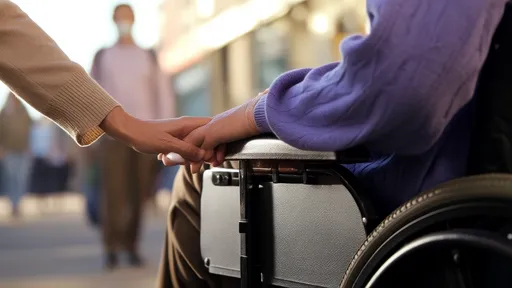
In a world that often equates desirability with physical perfection, the intimate lives of people with disabilities remain shrouded in silence and misconception. Yet, a quiet revolution is unfolding as disabled individuals reclaim their narratives, challenging societal biases that have long denied them the right to love, passion, and emotional fulfillment. This movement isn’t about inspiration—it’s about visibility, autonomy, and the simple truth that disability and desire are not mutually exclusive.
For decades, mainstream media has either erased disabled people from romantic storylines or reduced them to asexual figures deserving pity rather than partnership. The message has been clear: bodies that deviate from the norm are not meant to be loved in that way. But grassroots activists, artists, and writers are dismantling these assumptions through raw, unapologetic storytelling. Social media campaigns like #DisabledAndHot and memoirs such as Keah Brown’s The Pretty One expose the absurdity of conflating disability with celibacy. As Brown writes, "My body is not an apology—it’s a celebration."
The barriers extend beyond perception. Physical infrastructure—from inaccessible bedrooms to medical equipment designed without intimacy in mind—creates tangible obstacles. Sexologist Dr. Mitchell Tepper notes that even healthcare providers often avoid discussing sexuality with disabled patients, leaving many without guidance on adapting sexual expression. Yet innovators are responding: companies like Bump’n now produce adaptive pleasure products, while occupational therapists collaborate with clients to modify positions and techniques. These solutions aren’t about "overcoming" disability but embracing it as one facet of a multifaceted human experience.
Perhaps the most radical act is the public assertion that disabled people can be not just participants in intimacy but objects of genuine desire. Photographer Belinda Mason’s Intimate Encounters series captures disabled couples mid-embrace, their chemistry undeniable. Meanwhile, platforms like Love Disabled foster connections by rejecting the toxic trope that disabled relationships are inherently "less than." As one user remarked, "Finding love didn’t fix my disability—it fixed the loneliness others imposed on me."
This cultural shift carries profound implications. When society acknowledges disabled intimacy, it affirms that all bodies have worth beyond utility or aesthetics. It forces a reckoning with why we valorize certain types of connections while treating others as taboo. Most importantly, it returns agency to those whose desires have been policed, ignored, or infantilized. The roses on wheelchairs aren’t symbols of tragedy—they’re declarations that love, in all its forms, defies narrow definitions.
The road ahead remains steep. Legal frameworks still restrict reproductive rights for many disabled individuals, and dating apps remain fraught with ableism. Yet every candid conversation, every inclusive sex-ed curriculum, and every portrayal of disabled joy chips away at the stigma. As activist Alice Wong puts it, "We’re not asking for permission to exist—we’re rewriting the rules." In this rewriting lies a future where intimacy is neither a privilege nor a provocation, but a fundamental human right—thorny, beautiful, and unmistakably alive.
By /Jul 3, 2025
By /Jul 3, 2025
By /Jul 3, 2025
By /Jul 3, 2025
By /Jul 3, 2025
By /Jul 3, 2025
By /Jul 3, 2025
By /Jul 3, 2025
By /Jul 3, 2025
By /Jul 3, 2025
By /Jul 3, 2025
By /Jul 3, 2025
By /Jul 3, 2025
By /Jul 3, 2025
By /Jul 3, 2025
By /Jul 3, 2025
By /Jul 3, 2025
By /Jul 3, 2025